
Front Side of Automobile Filter Paper
The pores on the front side of the filter paper are trumpet-shaped, facing the airflow direction, and the pores become smaller along the thickness of the filter paper.


Car Air Filter Production Process

Truck Air Filter Production Process

Cabin Air Filter Production Process

Spin-On Fuel & Oil Filter Production Process

Eco-Friendly Fuel & Oil Filter Production Process

Toyota Car Oil Filter Production Process

Toyota Car Fuel Filter Production Process

Hydraulic Filter Production Process

Dust Collector Filter Bag Production Process

Dust Collector Filter Cartridge Production Process

Primary, Medium & High-Efficiency Filters Production Process


What is filter paper? Filter paper is made from natural fibers, synthetic fibers, or a mixture of both, with the addition of additives and binders. It is used to separate solid particles or other substances from the fluid (air, lubricating oil, fuel, and other fluids) in which they are suspended. Filter paper is categorized into laboratory filter paper, household filter paper, and industrial filter paper. Automotive filter paper is a type of industrial filter paper.
Automotive Filter Paper
Automotive filter paper is a type of filter material used in automotive filters. It is mainly made of cellulose, synthetic fibers, resin, and other materials, featuring high strength, high filtration efficiency, and low resistance. The main function of automotive filter paper is to filter impurities and pollutants from air and liquids, protect the engine, enhance interior air quality, and extend the lifespan of the automobile. Automotive filter paper is divided into two categories: cured filter paper and non-cured filter paper.

Cured Filter Paper
It uses thermosetting resin impregnation technology, typically phenolic resin, etc. Filter paper impregnated with phenolic resin must be heated at 150 °C for 10–15 minutes to cure the resin and increase the stiffness of the filter paper. The curing temperature for phenolic resin is 160–180 °C, with a duration of more than 10 minutes. The disadvantages of curing include the release of harmful gases such as formaldehyde, free phenol, phenol derivatives, amines, etc. This type of filter paper is usually used to make oil and fuel filters.

Non-Cured Filter Paper
It uses thermoplastic resin impregnation technology. Generally, ethylene polymers are used, such as polyvinyl acetate resin, acrylic resin, polyvinyl chloride, butadiene-styrene latex, and polyvinyl acetate. During the processing of non-cured resin, only a little heat or no heat is required. These types of resins have a certain flexibility at room temperature, making them suitable for manufacturing air filters with air as the medium.
Structure of Automobile Filter Paper
Filter paper has directionality; the front side of the filter paper has looser fibers, while the mesh side has denser fibers.
The pores on the front side of the filter paper are trumpet-shaped, facing the airflow direction, and the pores become smaller along the thickness of the filter paper.

The mesh surface should be the direction of air outflow. On the mesh surface, colored lines are usually drawn for user identification to prevent mistakes. If the direction is reversed, the dust holding capacity of the filter element is reduced by 30% during use.
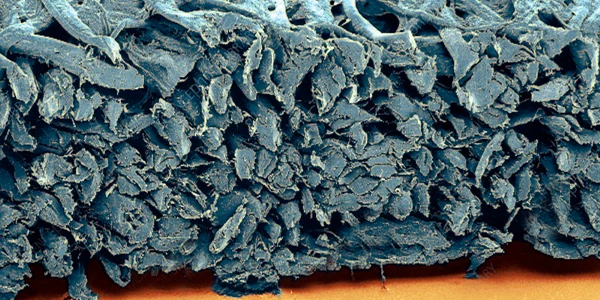
The thickness of the filter paper is about 0.35–0.5 mm, while the particle size of dust ranges from a few microns to several tens of microns. An enlarged side view of the filter paper shows that it is a multi-layer structure.
Filtration Principle of Automobile Filter Paper
Filter paper filtration: It should not be simply understood as having only a screening function, but rather as possessing the capability for depth filtration.
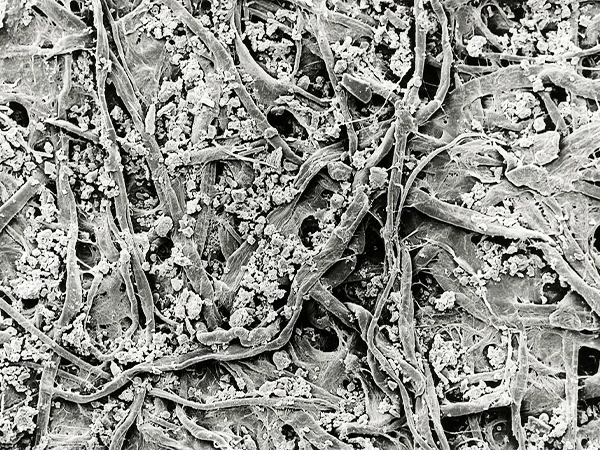
Depth filtration: The sieving effect is the basic principle of the filter. By utilizing the porous structure of the filter paper, impurity particles in the fluid can be filtered out. The filtered impurity particles form a dust layer on the filter paper, further enhancing the sieving effect. However, mesh interception is not the primary function; adsorption is the main function. Impurity particles in the fluid are constantly undergoing random Brownian motion. When they move to the pore walls of the porous filter material, they adhere and are retained on the pore walls. These impurity particles collide with each other during movement and coalesce and adhere under the influence of surface binding forces. Different materials have varying effects on particle adsorption, commonly including electrostatic adsorption, Brownian motion adsorption, gravitational adsorption, and inertial impact adsorption.
Automobile Filter Paper Category
Automobile filter paper can be divided into three categories based on its use: air filter paper, oil filter paper, and fuel filter paper.
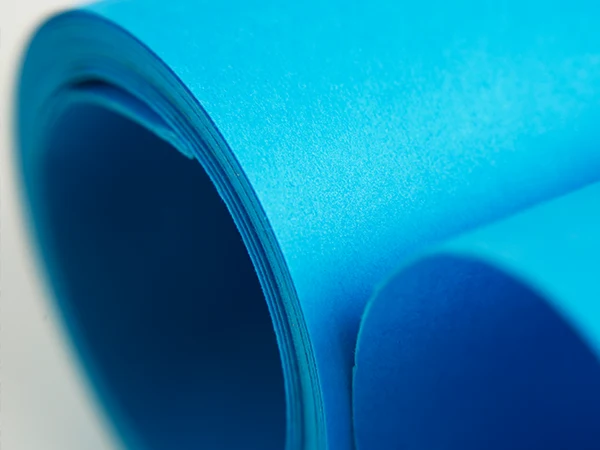
Air filter paper is used in car and truck air filters to ensure the cleanliness of the air entering the engine. Since trucks operate in harsher environments than cars and protect more expensive engines, their filter paper is generally thicker and has higher filtration efficiency.

Oil filter paper is designed to reduce the damage caused by accumulated particles in the engine oil to engine components. Its working conditions are very harsh, requiring long-term operation under acidic and high-pressure conditions. Therefore, phenolic resin is used to enhance and ensure the durability of the filter paper in harsh environments.
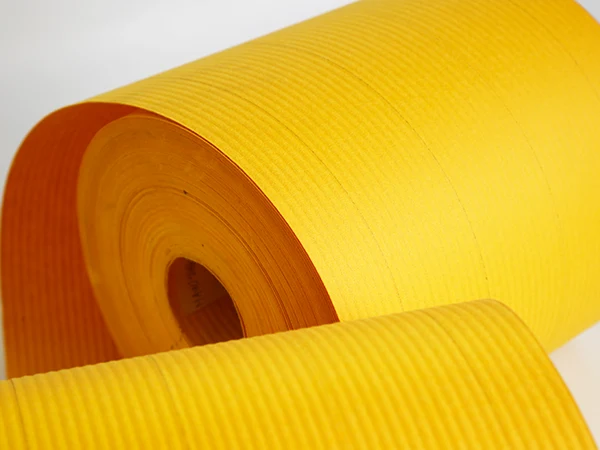
Fuel filter paper is used to ensure the cleanliness of the fuel entering the engine.
Fuel is easily contaminated by water, so the surface performance of the filter paper is very important in the water separation process. Typically, filter paper impregnated with phenolic resin has suitable surface properties to achieve coalescence and filtration of free water.
Why is the filter Rating of Oil Filter Paper Usually 20–30 Microns?
Because when the engine is running, the pressure of the oil pump is very high, usually between 1.9–5 bar; Engine oil is a very viscous liquid, and when 'high pressure' meets 'high viscosity,' it is easy to form blockages; When an automobile suddenly accelerates violently at full throttle, the oil pressure suddenly increases. To ensure that the engine does not run out of oil, the oil filter may even open the 'bypass valve,' allowing the oil to flow directly through (without filtration), and at this time, the oil does not receive any filtration. Therefore, under this requirement, the filter rating of the oil filter is generally controlled between 20–30 microns. This is deliberately done to prevent oil blockage when the driver suddenly accelerates.