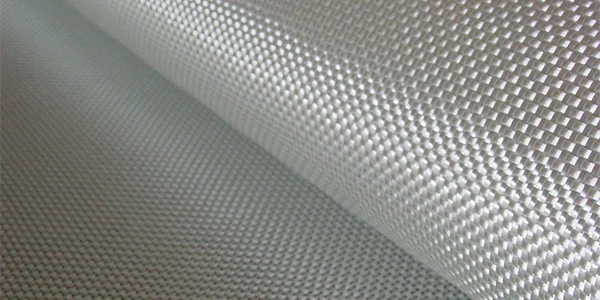
Woven Filter Material
Fabric is made by interweaving spun fibers in a certain pattern, mainly consisting of plain weave, twill weave, and satin weave.


Car Air Filter Production Process

Truck Air Filter Production Process

Cabin Air Filter Production Process

Spin-On Fuel & Oil Filter Production Process

Eco-Friendly Fuel & Oil Filter Production Process

Toyota Car Oil Filter Production Process

Toyota Car Fuel Filter Production Process

Hydraulic Filter Production Process

Dust Collector Filter Bag Production Process

Dust Collector Filter Cartridge Production Process

Primary, Medium & High-Efficiency Filters Production Process

What is filter material? Filtration refers to the purification process of removing dispersed dust particles from a fluid with a porous medium. During filtration, due to inertial collision, interception, diffusion, sieving, as well as electrostatic force, gravity, and other effects, dust particles suspended in the fluid are deposited on the surface of the porous medium or contained within it. As a porous material, its structure may be fibrous, porous, or a combination of these structures, collectively referred to as filter materials. Filter materials are widely used in almost all situations where dust is generated by human activities, including industrial production, transportation, commercial activities, and daily life.
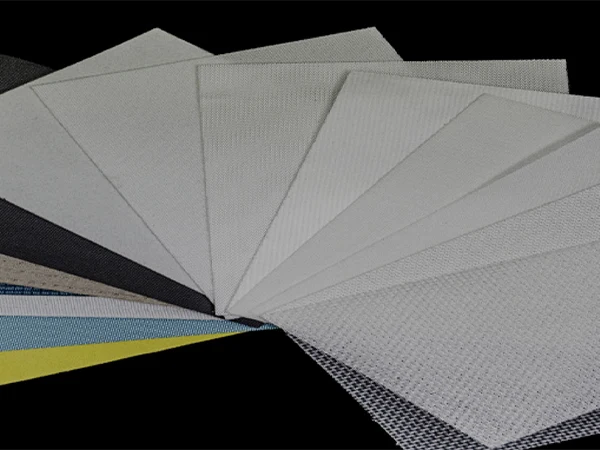
Filter Material Types
According to the different uses of filter materials, we classify them into three categories, focusing on intake filter materials and exhaust filter materials.
Intake Filtration vs Exhaust Filtration
Both intake filtration and exhaust filtration fall under the category of filtration purification technology. They share many similar working principles, with their differences outlined as follows.
Different Purposes
Intake filtration is mostly used in clean, ventilation, and air conditioning intake systems, and is rarely set up in factory exhaust dust removal systems. Exhaust filtration is mainly applied in the dust removal process.
Filter Material Structure
Intake filter materials include metal mesh, non-woven fabrics, or special filter paper, which do not require dust cleaning and regeneration. Exhaust filter materials require dust cleaning and regeneration during the dust removal process, with a filter material lifespan of 3–5 years.
Inlet Concentration
The inlet mass concentration of filter materials for different intake applications is generally below 5 mg/m3, while for exhaust applications, it can exceed 100 g/m3. Some exhaust filter materials even have no restrictions on inlet concentration.
Different Filtration Speeds
The filtration speed of intake filter materials is generally 0.1–2.5 m/s, whereas for exhaust filter materials, it is typically 0.6–1.6 m/min, differing by 1–2 orders of magnitude.
Different Discharge Concentrations
The emission mass concentration for exhaust purification is generally between 10–30 mg/m3, with some systems achieving below 10 mg/m3, which is considered ultra-low emission. After intake purification, the outlet concentration is sometimes measured by the number of particles.
Filter Material Types
Fabric is made by interweaving spun fibers in a certain pattern, mainly consisting of plain weave, twill weave, and satin weave.
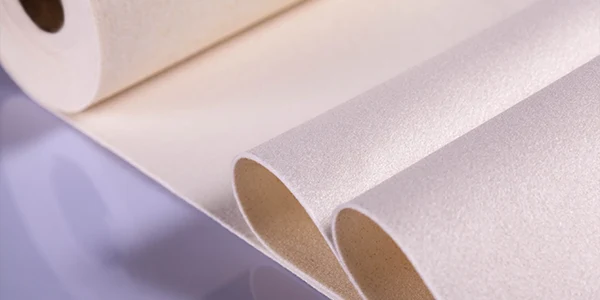
Non-woven filter material is a type of filter material that forms a fiber web directly without the general spinning and weaving processes. For natural fibers, heat, moisture, pressure, and movement can be used to bond them into felt.
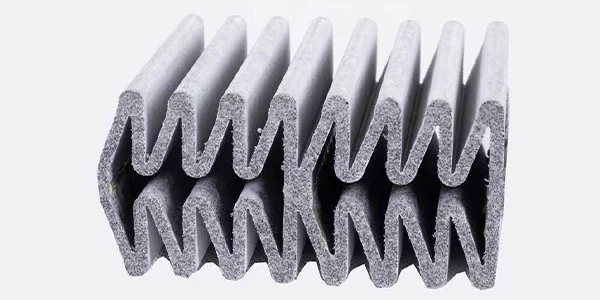
The filter material is made by hot pressing polymers into single-pore filter elements, then coating them with special materials. Its representative filter material is the corrugated sintered plate, featuring high dust removal efficiency, stable resistance, and long lifespan.
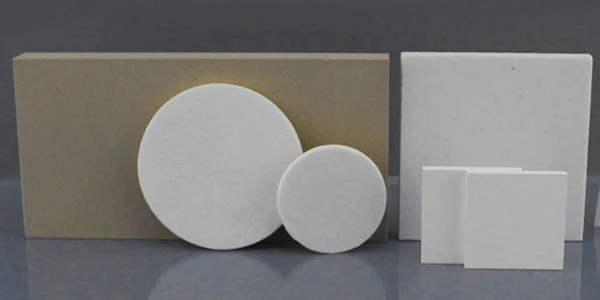
Porous ceramic filter material is a filter material made by sintering refractory materials with binders at high temperatures. Its internal structure contains numerous fine pores with controllable pore sizes that are interconnected.
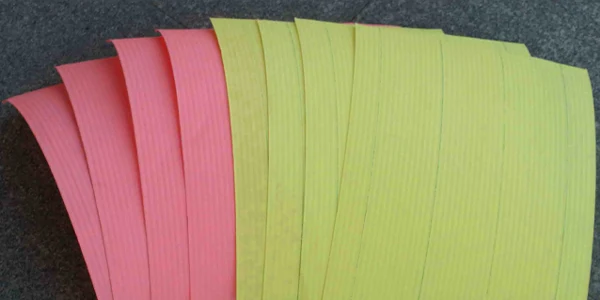
Thin filter materials made using the wet papermaking method are convenient for folding into pleated filter cartridges and high-efficiency filters. They have the characteristics of increasing the filtration area and reducing the footprint and space of dust collectors.
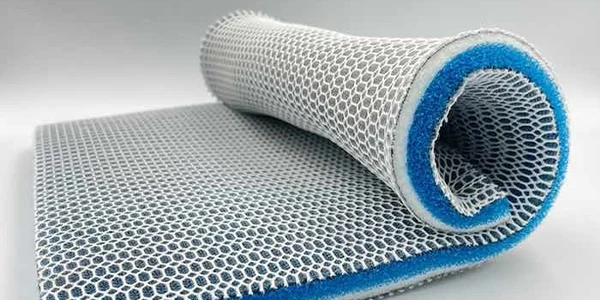
Filter materials made by two or more methods or composed of two or more materials are called composite filter materials. The processing of composite filter materials mainly involves methods such as adhesive bonding and hot-press bonding.
Filtration Mechanism of Filter Material
The filtration mechanism of filter materials can be summarized into five basic types: surface coarse filtration, depth coarse filtration, in-depth filtration, filter cake filtration, and toxic and harmful gas purification filtration.
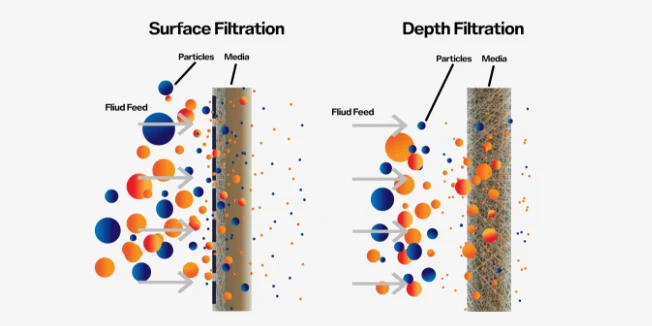
Surface coarse filtration occurs when particles are larger than the filter pores and cannot pass through. Depth coarse filtration refers to particles entering the deeper part of the filter medium, where they are trapped because the deep flow channel size is smaller than the particle size.
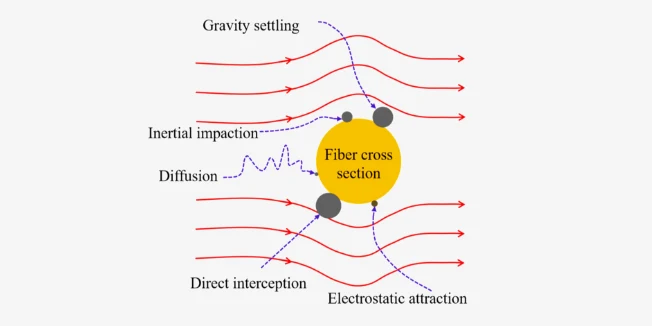
It includes the mechanism of removing particles from fluids, even if the particles may be smaller than the diameter of some points in the filter structure. Most theories related to non-woven filter materials are based on the in-depth filtration effect.
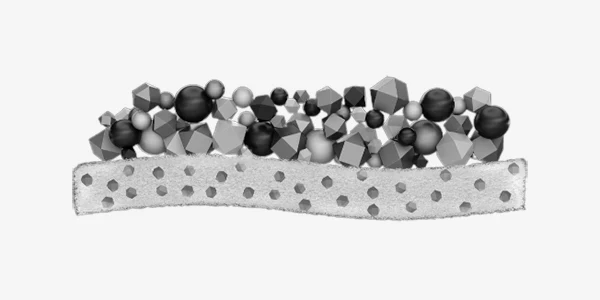
Dust layer filter cake filtration refers to the process where particles are captured and accumulated into a layer of filter cake on or near the surface of the filter material, participating in the filtration.
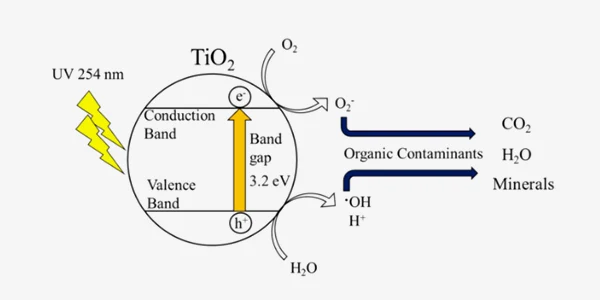
Toxic and harmful gases are gaseous molecular particles that, like air, can penetrate the filter material. However, after special treatment of the conventional filter material fiber layer, they can also be separated, captured, and purified. For example, using nano TiO2 photocatalytic materials.
Development Trends of Filter Materials
With the continuous expansion of the application fields of filter materials, the trend of replacing other dust removal methods with filtration dust removal methods is closely related to the widespread application of dust removal filter materials, apart from the increasing environmental protection and human health requirements. Currently, the development of dust removal filter materials has the following trends: